For Homero Gómez González, killed defending Earth
[W]hile birds and warmer weather
are forever moving north,
the cries of those who vanish
might take years to get here.
–Carolyn Forché
In the photo, he is thick-necked and as sturdy
as a five-hundred-year-old Spanish oak bureau
in Michoacán, as heavy and unmoveable;
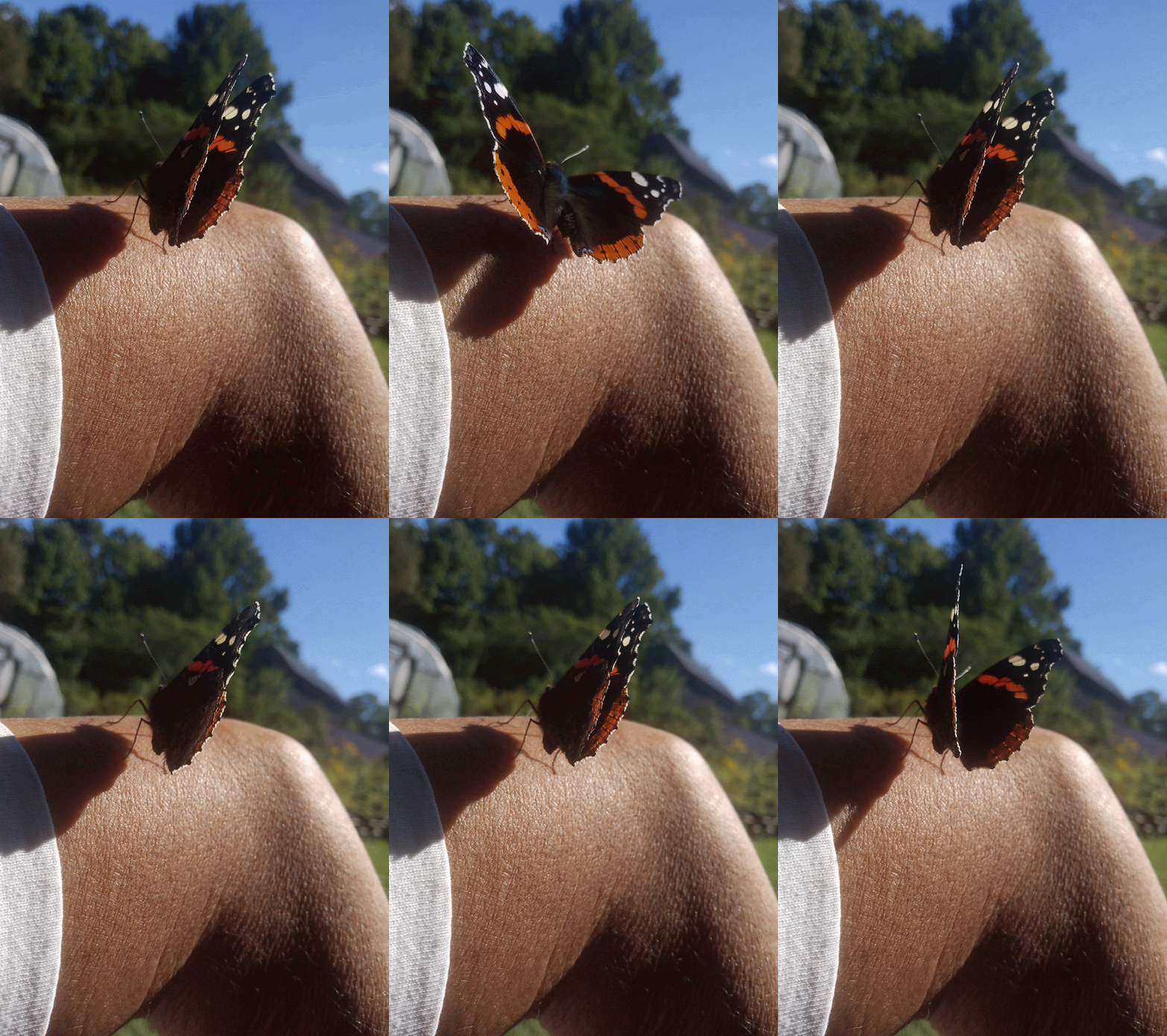
Monarch butterflies rest all over his shirt
and khakis. If you close your eyes,
you can see them slowly close wings,
barely moving air. You can see the darkness
at the bottom of the well where they found him.
In the photo, in spite of butterflies, he has no smile.
Fully frontal, he confronts the camera
as the industrial gaze: a choice to communicate
with an unknown afar:
and here I am en el norte,
where in the shortening days of August
the monarchs may chew thick leaves of common milkweed
and rest in butterfly weed,
orange upon orange.
Once, while a new farmer, I killed a caterpillar
thinking it was a tomato hornworm.
Green and yellow and black—
I should have known better.
I tried to feed it to the chickens,
said to love hornworms,
but they just looked at me strangely,
that way they do.
I am at the bottom of the well
where they found him dead.
One day the only orange to see may be the flowers
I planted to feed the butterflies
who no longer return,
a banquet set to empty chairs.
The one I killed might have been
the mother of thousands.
This is how I pretend to power:
guilt is easier than helplessness.
“The Monarch Effect” was first published in Voices of the Earth: The Future of Our Planet II (Vol. 2, No. 1, 2020): 35-6. It will be in the No Edges in a Sphere collection. To receive an alert when it is published, sign up here.
Leave a Reply